

If you are wondering how long do TMS benefits last?, clinical evidence shows that relief typically continues for several months to a year or longer following a full treatment course. For individuals struggling with major depressive disorder who have not found adequate relief from oral antidepressant medications, Transcranial Magnetic Stimulation (TMS) provides a revolutionary, non-invasive alternative. However, understanding the long-term durability of transcranial magnetic stimulation, what affects your personal timeline, and how maintenance strategies help preserve progress is essential for navigating your mental health journey successfully.
- Key Takeaways on TMS Therapy Durability and Relief
- TMS benefits typically persist for 6 to 12 months or longer, though exact duration varies widely based on individual clinical profiles and medical history.
- Neuroplastic changes induced by magnetic pulses continue to reorganize neural circuits even after the final active stimulation session is completed.
- Proactive follow-up care and maintenance TMS booster sessions can re-establish symptom remission if clinical depression indicators begin to return.
- Combining ongoing psychotherapy, lifestyle modifications, and psychiatric management offers the highest probability of long-term depression recovery.
How Long Do TMS Benefits Last? What Clinical Data Shows
When patients ask, “how long do TMS benefits last?” clinical research demonstrates that a standard 4 to 6-week acute course of Transcranial Magnetic Stimulation yields sustained relief for months or years. Unlike pharmaceutical interventions that require daily systemic chemical ingestion, TMS alters local brain physiology through targeted electromagnetic induction. These lasting structural and functional changes in neural pathways explain why therapeutic effects endure well beyond the end of daily office visits.
TMS utilizes specialized magnetic fields to stimulate underactive neurons in the dorsolateral prefrontal cortex—the region responsible for mood regulation and executive cognitive control. To understand how these therapeutic benefits build over time, exploring how TMS works illustrates why cumulative stimulation across 30 to 36 daily sessions is necessary to lock in neuroplastic adaptations.
Improvement may develop gradually during treatment rather than immediately after the first session.
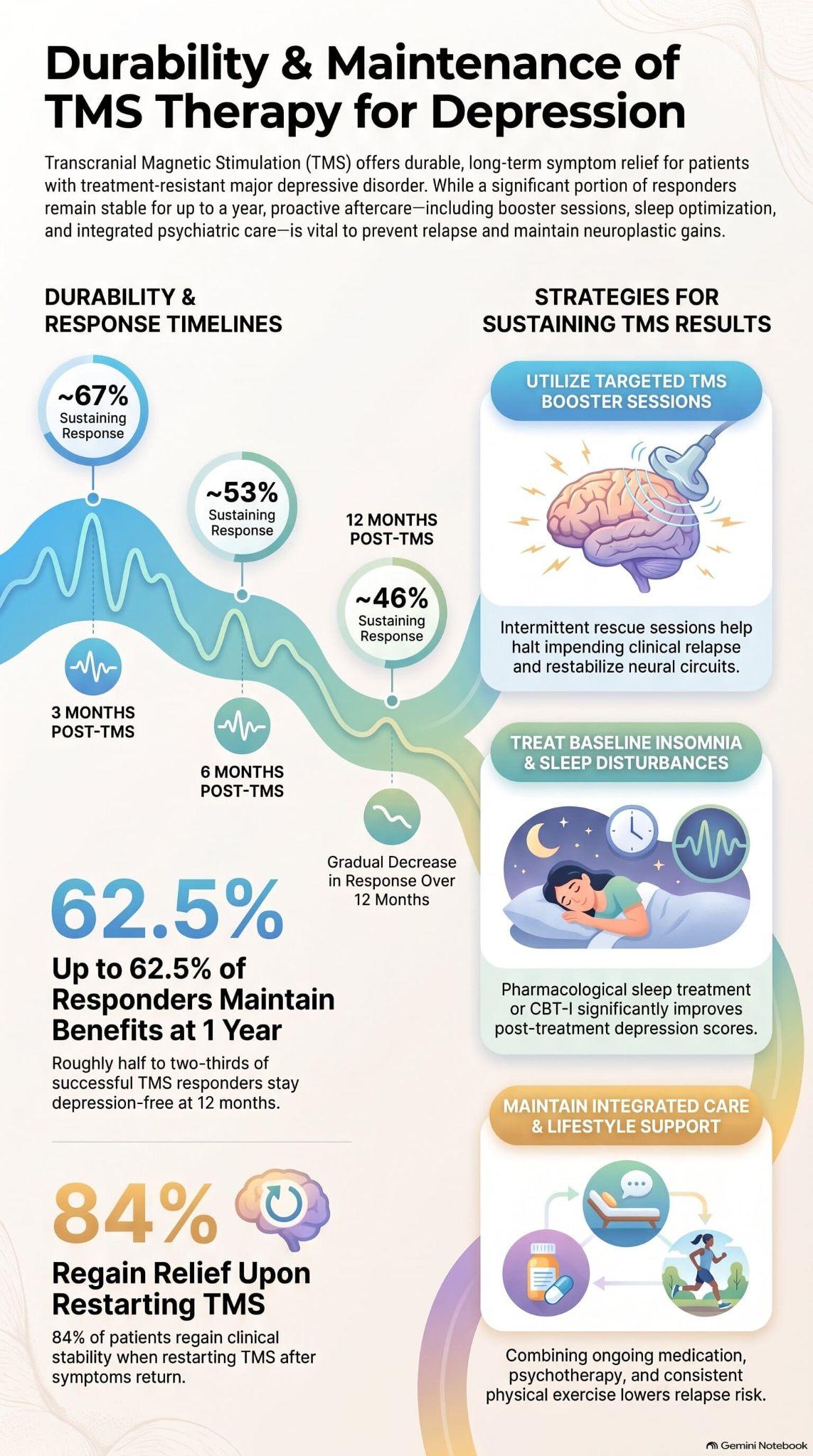
Clinical trials tracking patient outcomes over extended timeframes provide concrete empirical evidence regarding durability. A landmark 2014 multisite naturalistic observational study published in The Journal of Clinical Psychiatry evaluated the long-term effectiveness of TMS in patients treated for major depressive disorder:
“75 of 120 patients (62.5%) who initially responded to TMS or achieved remission continued to meet response criteria during the 12-month follow-up.” – PubMed.
This robust trial revealed that nearly two-thirds of individuals who achieved clinical response or total remission retained their improved state standardly throughout a full year. Because a subset of these patients received brief booster protocols upon early detection of recurring symptoms, the data highlights that long-term wellness is best achieved through periodic clinical oversight rather than viewing acute care as a isolated, one-time fix.
Ultimately, while TMS offers remarkable longevity of relief compared to oral medications—which often suffer from tachyphylaxis or “poop-out”—individual biological factors dictate your specific timeline. Partnering with experienced psychiatric clinicians ensures your brain health is continuously evaluated to prevent relapse before it impairs daily functioning.
What Factors Affect The Benefits Of Transcranial Magnetic Stimulation?
While clinical data establishes overall population averages, individual response durability varies. Biological differences, life circumstances, and secondary psychiatric conditions influence how long neural pathways maintain their revitalized state following electromagnetic therapy. Identifying these variables allows clinicians to construct customized maintenance frameworks that protect your therapeutic investment.
Important considerations include:
- Initial Treatment Response Depth: Patients who reach full symptom remission by the end of their primary acute sequence statistically maintain benefits significantly longer than those who achieve partial clinical response. Deep cellular stabilization creates a more resilient foundation against future depressive episodes.
- Depression Chronicity and Severity: Individuals with decades-long treatment-resistant major depressive disorder or multiple previous failures of pharmacological trials may require earlier re-evaluation. A longer history of severe illness often reflects entrenched neural pathways that benefit from structured maintenance protocols.
- Integrated Maintenance Therapies: Combining post-TMS care with ongoing psychotherapy (such as Cognitive Behavioral Therapy) and maintenance psychiatric medication management provides multi-layered protection. Synergistic treatments reinforce positive brain reorganization across psychological and biochemical channels.
- Sleep Quality and Environmental Stress: Chronic insomnia, high occupational strain, unresolved trauma, or major life transitions exert physiological stress on brain networks. Prioritizing sleep hygiene and stress management protects newly restored prefrontal cortex activity from premature degradation.
- Structured Clinical Monitoring: Routine follow-up appointments allow psychiatric providers to monitor subtle mood fluctuations using standardized assessment scales (such as the PHQ-9 or HAM-D). Early detection of shifting scores enables proactive interventions before functional decline occurs.
Recognizing that major depression is a recurrent chronic medical condition is key to long-term wellness. While TMS is powerful, combining TMS Therapy for Depression with holistic psychiatric care ensures sustained emotional stability and minimizes relapse risks.
Why Can TMS Benefits Continue After The Final Session?

A remarkably encouraging aspect of Transcranial Magnetic Stimulation is that many patients experience continued mood enhancements in the weeks following their final clinical session. This ongoing progress occurs because magnetic stimulation triggers long-term potentiation (LTP)—a cellular mechanism where synaptic connections between neurons are physically strengthened. Completing your final scheduled treatment is not the end of therapeutic healing; rather, it sets in motion persistent neuroplastic momentum.
During active daily therapy, electromagnetic pulses stimulate targeted cortical targets thousands of times. This repeated activation prompts brain tissue to synthesize neurotrophic factors like Brain-Derived Neurotrophic Factor (BDNF). BDNF acts as fertilizer for brain cells, encouraging arborization, new dendritic spine growth, and healthier network connectivity across deep limbic structures involved in emotional processing.
Because neural reorganization takes time to consolidate into outward behavioural changes, tracking functional domain markers helps patients measure post-treatment gains accurately:
- Mood Stability and Resilience: Noticing that emotional lows feel less severe, persistent, or overwhelming, and observing increased emotional recovery after everyday stressors.
- Cognitive Clarity and Motivation: Experiencing reductions in brain fog, improved decision-making capacity, sharper concentration at work, and a renewed interest in hobbies or social connection.
- Somatic Vigor and Rest Restoration: Observing smoother transitions into restorative sleep cycles, reduced morning lethargy, and higher natural physical energy throughout afternoon hours.
- Functional Execution: Finding daily home, professional, and personal care responsibilities easier to initiate, navigate, and complete without intense fatigue or internal resistance.
Documenting these gradual improvements in a personal wellness journal provides valuable objective context during follow-up psychiatric evaluations, validating that long-term neuroplastic healing is actively occurring.
How Can You Tell When TMS Benefits Are Wearing Off?

It is completely normal to experience occasional bad days, temporary stress, or brief emotional fluctuations following TMS treatment. A single difficult afternoon does not signify that your therapeutic gains are eroding. However, recognizing the difference between normal human emotional variation and a persistent pattern of returning depressive symptoms is crucial for maintaining long-term recovery.
If clinical benefits begin to taper after several months, the decline typically unfolds gradually rather than overnight. Key warning signs that indicate your TMS benefits may be wearing off include:
- Persistent low mood, unexplained sadness, or emotional numbness lasting longer than two consecutive weeks.
- Anhedonia—the loss of pleasure or interest in social activities, hobbies, and personal relationships that previously brought joy.
- Relapse of sleep disruptions, including early morning awakenings, difficulty falling asleep, or persistent daytime fatigue.
- Return of executive dysfunction, manifest as mental fog, indecisiveness, poor memory recall, or procrastination at work.
- Increased irritability, anxiety, restlessness, or feeling easily overwhelmed by routine daily tasks and social interactions.
Catching these subtle indicators early empowers you to take action before depression fully re-establishes itself. Scheduling a timely clinical review with your psychiatric team allows for early re-evaluation and adjustment of your care plan.
Contact your treating clinician promptly whenever symptom recurrence interferes with daily life. If you or a loved one experience severe psychiatric distress, suicidal thoughts, or a mental health crisis within the United States, call or text 988 to reach the Suicide & Crisis Lifeline, or seek immediate emergency emergency medical services.
Do TMS Booster Sessions Help Maintain Improvement over Time?
For patients who notice a decline in therapeutic benefits after initial recovery, maintenance or booster TMS sessions offer a proven method to restore prefrontal neural activation. Rather than repeating a full 6-week treatment course, a booster protocol typically consists of a brief series of sessions over a few days to restimulate pathways before severe depression returns.
Clinical consensus supports utilizing targeted re-stimulation when indicated. As highlighted in the Mayo Clinic’s guidance on TMS:
“Repeat treatment may be considered when depression improves for at least two to three months but symptoms later return. The decision depends on the patient’s clinical response and individual treatment needs, and repeat TMS is not necessary or effective for everyone.” – Mayo Clinic.
Your psychiatric team will work collaboratively with you to evaluate ongoing maintenance strategies tailored to your unique profile:
| Option | Purpose |
| Symptom monitoring | Track changes and identify returning symptoms. |
| Booster or repeat TMS | Provide additional treatment when clinically appropriate. |
| Medication or psychotherapy | Continue or adjust other parts of your depression care plan. |
| Ongoing clinical follow-up | Review progress and determine whether the current plan remains appropriate. |
Long-term observational data reinforces the efficacy of booster interventions. Research indicates that up to 84% of patients who experience a return of depressive symptoms regain complete clinical response or remission upon receiving a brief repeat TMS sequence. This remarkable re-response rate highlights that initial successful treatment renders the brain uniquely receptive to secondary re-stimulation.
Proactive scheduling and early clinical communication ensure that booster protocols are administered smoothly, preventing full symptomatic relapse and safeguarding your personal and professional quality of life.
Maintenance protocols should always be determined by qualified medical professionals. Your clinician will carefully analyze your original response curve, current symptom severity, and overall psychiatric health before recommending additional sessions.
How Can Best Life Psychiatry Support Long-Term TMS Care and Recovery?

Navigating major depressive disorder requires comprehensive, compassionate, and personalized psychiatric expertise. At Best Life Psychiatry, our clinical team specializes in advanced interventional treatments for individuals struggling with treatment-resistant depression. We offer an integrated care continuum that combines expert medication management, psychotherapeutic integration, Spravato (esketamine), and FDA-cleared NeuroStar TMS therapy.
From your initial clinical consultation through post-treatment maintenance monitoring, our team works to protect your long-term wellness. We conduct thorough pre-treatment mapping, perform standardized clinical progress checks, handle comprehensive insurance coverage verifications, and design tailored maintenance booster plans tailored to your needs.
For residents across Central Arkansas, including Benton, Little Rock, Conway, and surrounding areas, our Benton TMS clinic provides accessible, specialized depression care in a comfortable environment.
Best Life Psychiatry utilizes the advanced NeuroStar TMS system, an FDA-cleared, non-invasive technology proven to treat major depression without systemic medication side effects like weight gain, sedation, or sexual dysfunction. Treatment sessions are completely outpatient, allowing you to drive yourself home and immediately resume daily activities following care.
How Long Do TMS Benefits Last? Finding Lasting Depression Relief
Understanding how long do TMS benefits last? empowers you to approach your mental health care with clarity and confidence. While durability varies between individuals, clinical research confirms that Transcranial Magnetic Stimulation provides long-term relief for many patients suffering from major depressive disorder. With expert clinical oversight, objective progress tracking, and timely booster protocols, sustained recovery is achievable.
Best Life Psychiatry in Benton, Arkansas, is dedicated to helping you achieve lasting emotional health through state-of-the-art psychiatric modalities, individualized care, and continuous long-term support.
If you are ready to take the next step toward reclaiming your life from depression, contact Best Life Psychiatry today to schedule a comprehensive evaluation, verify insurance benefits, and explore how TMS can support your long-term well-being.
Frequently Asked Questions About TMS Durability and Benefits
How Long Do TMS Benefits Last for Major Depressive Disorder?
When patients ask, “how long do TMS benefits last?” clinical research demonstrates that most individuals maintain significant relief for 6 to 12 months or longer after completing a course of transcranial magnetic stimulation. Long-term durability varies depending on individual biological factors, depression history, and ongoing maintenance care.
When Should Someone Consider Repeat TMS or Maintenance Booster Sessions?
Repeat TMS or maintenance booster sessions should be considered when depressive symptoms begin to recur after an initial period of response lasting at least two to three months. The Mayo Clinic notes that repeat treatment can effectively restimulate neural pathways, with up to 84% of patients regaining clinical stability.
Do TMS Benefits Continue After Completing The Final Session?
Yes, some patients continue to experience symptom improvement after their final TMS session. The duration and extent of improvement vary, so clinicians should assess changes in mood, energy, sleep, and daily functioning during follow-up appointments.
Does Everyone Need Routine TMS Maintenance Sessions?
No, not everyone needs maintenance TMS sessions. A clinician will consider the patient’s treatment response, symptom history, and current needs before recommending continued monitoring, additional TMS, or other treatment options.
What Therapeutic Benefits Can You Expect From TMS Sessions?
TMS may reduce depressive symptoms and improve daily functioning in some patients, particularly those who have not responded adequately to other treatments. The extent and duration of improvement vary among individuals, and TMS cannot guarantee remission or prevent future depressive episodes.